
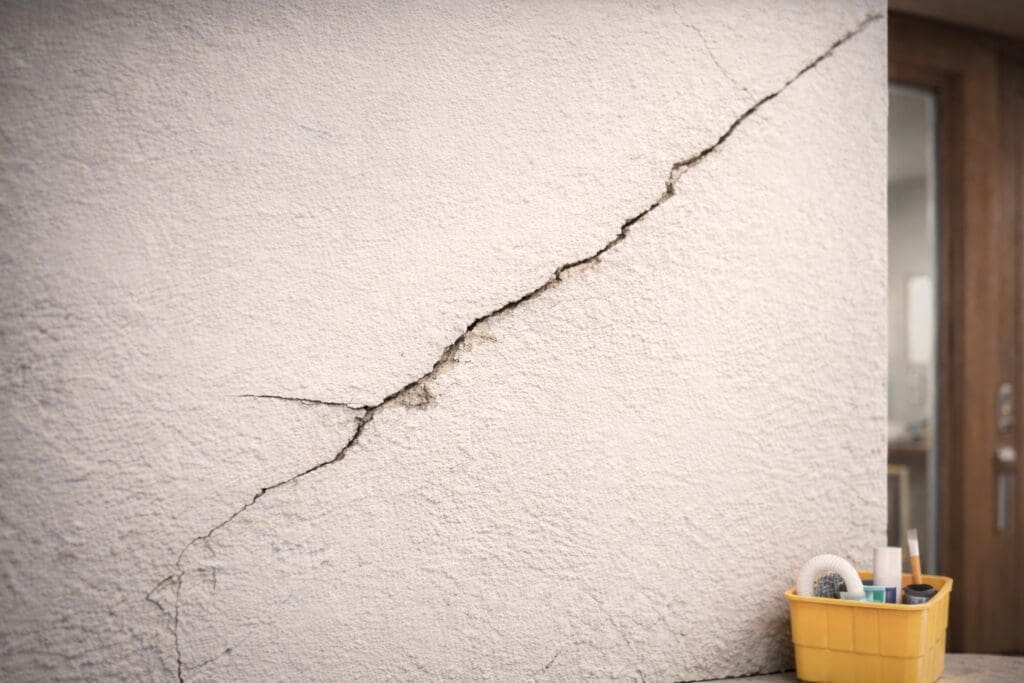
Cracks happen—even in well-built homes. Some are harmless hairlines; others point to movement, moisture, or poor prep. Here’s a quick, no-nonsense guide from Aussie Plasterboard to help you spot the difference and choose the right fix.
What Plaster Is in 20 seconds
Traditional plaster is a hand-applied mix (typically lime/gypsum/cement + water) laid in layers over a base, then trowelled smooth. It cures hard and breathes well—but because it’s rigid, it can telegraph movement as cracks.
Common Crack Types
- Hairline: Fine surface lines from curing or seasonal movement. Usually cosmetic.
- Diagonal at doors/windows: Stress at openings; monitor closely.
- Stair-step: Zig-zag over masonry lines; can indicate foundation movement.
- Vertical/horizontal: From shrinkage, framing movement or moisture.
- Cornice & joins: Where different materials meet; often humidity or adhesion issues.
- Bulging/sagging with cracks: Red flag—plaster may be detaching from its base.
Why Cracks Form (Top Causes)
- Building movement & settlement – Natural settling, load changes from renos, reactive soils.
- Moisture – Roof/gutter leaks, plumbing issues, rising damp, high indoor humidity.
- Poor application – Wrong mix, rushed drying, weak bonding to lath/board.
- Temperature & humidity swings – Different materials expanding at different rates.
- Vibration – Nearby construction, traffic, or heavy reno tools.
- Age & wear – Older compounds lose flexibility; repeated stress shows up over time.
When To Worry
Get it checked if the crack is:
- Wider than 2 mm or spreading week-to-week
- Diagonal near openings
- Paired with sticking doors, uneven floors, or ceiling sag
- Accompanied by damp, bubbling paint, or musty smells
Quick check kit: ruler or crack gauge, torch (to rake light across the surface), moisture meter if you suspect leaks. Mark the crack end with a pencil and re-check in two weeks.
Preventing Cracks (Before They Start)
- Install right: Allow proper curing between coats; don’t force-dry with heaters.
- Manage humidity: Use exhaust fans, ventilate wet areas, consider a dehumidifier.
- Fix water issues early: Keep roofs, flashings and gutters sorted; direct water away from the slab.
- Plan renos with structure in mind: Get advice before knocking out walls or adding storeys.
- Use expansion joints on long runs and large ceilings to absorb seasonal movement.
How to Assess a Crack Before You Patch It
Before reaching for compound, take a moment to properly assess the crack. Size, direction, and location tell a story. A thin, stable hairline running randomly across a wall is often cosmetic. But a crack that widens at one end, continues through paint and substrate, or runs from ceiling to floor suggests structural movement. Measure the width at its widest point and check if edges are clean (shrinkage) or crushed and uneven (movement).
Lighting helps. Shine a torch along the wall at a low angle to reveal hidden ridges or bulges. Tap gently along the crack with your knuckles; hollow sounds may indicate plaster separation from the base. If you suspect moisture, use a moisture meter or inspect adjacent areas like skirting boards and ceilings.Timing matters too. Fresh cracks in a new build can be part of normal settlement, especially within the first 12 months. However, cracks that reopen after repair signal unresolved movement or moisture issues.
A careful assessment prevents wasted effort. Cosmetic cracks need reinforcement and proper finishing. Structural or moisture-related cracks need diagnosis first—then repair.
DIY vs. Professional
- DIY is fine for stable hairline cracks: mesh tape (if >1 mm), setting compound/joint compound, sand, prime, paint.
- Call a pro for: bulging or sagging, cracks >2 mm, recurring cracks, any moisture damage, or heritage finishes that need matching.
What You’ll Need (DIY Essentials)
Joint/setting compound • Mesh tape • Flexible putty knife • 120–180 grit sandpaper • Quality primer & paint
Pro tip: Fix the cause (moisture, vibration, movement) before the cosmetic patch—or the crack will be back.
We Can Help
Aussie Plasterboard stocks repair compounds, mesh tapes, cornice adhesives, moisture-resistant boards and more—everything you need for a neat, durable fix. Prefer a pro finish? We can point you to trusted local plasterers.


